Unity
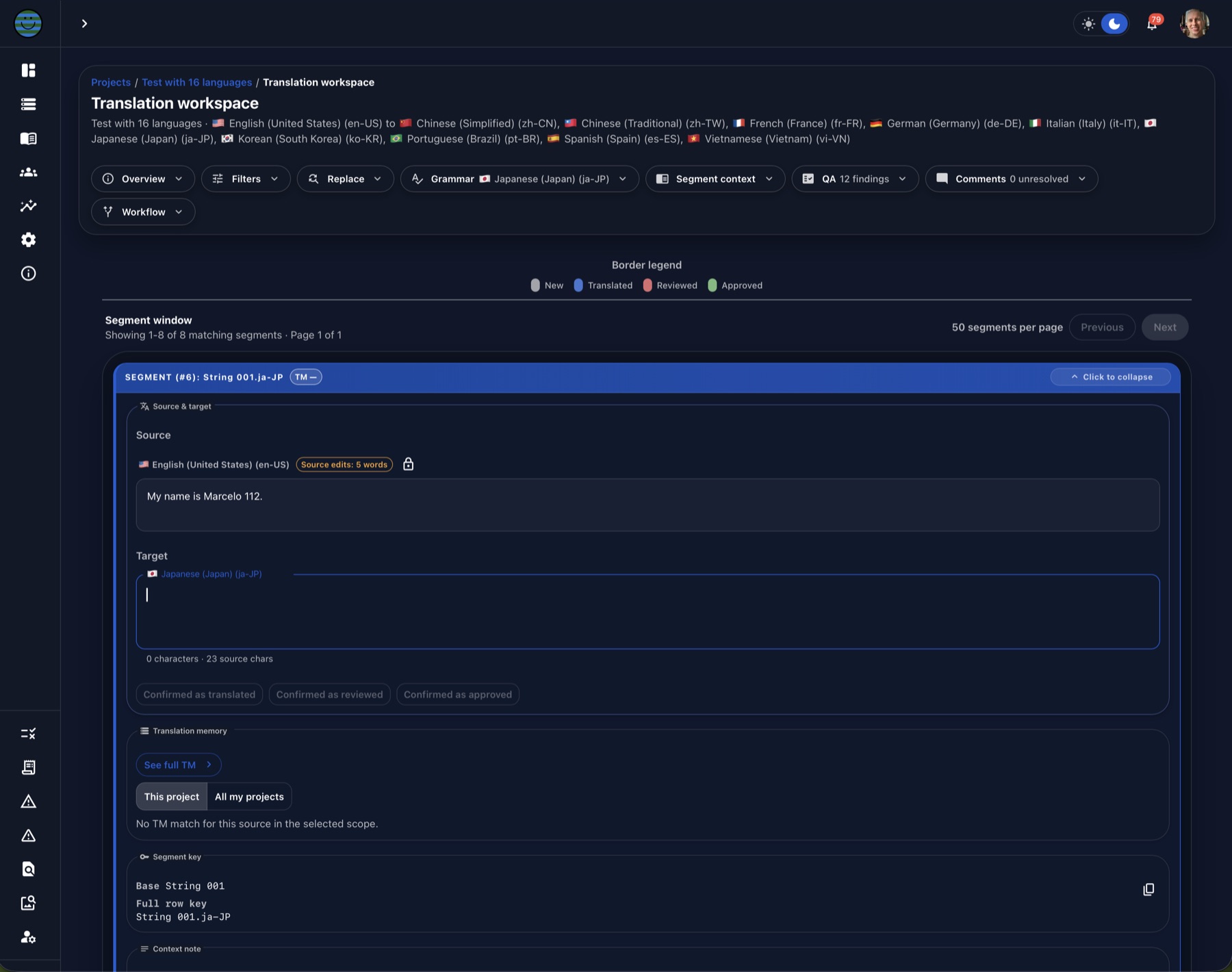
Wire Unity UI text and workflow swatches to live Gaia translation memory, then validate localized strings in Play mode before release packaging.

Gaia now reaches directly into Unity, Unreal Engine, and local AI environments - bringing translation memory, engine validation, and private LLM workflows closer to production.
Wire Unity UI text and workflow swatches to live Gaia translation memory, then validate localized strings in Play mode before release packaging.
Bring Gaia translation memory into Unreal Editor and trusted development builds so teams can inspect localized strings in real game context.
Draft translations and Adventure content against models running on infrastructure you control, with human review still at the center.
Montréal software atelier
Tomori builds thoughtful, high-quality products with a craftsmanship mindset. We design and develop software with clarity, discipline, and long-term usefulness in mind.
About Tomori
Tomori is a Montréal-based software company founded by industry veterans with more than two decades of experience across gaming, software development, localization, and product operations.
The name Tomori conveys the idea of coming to light, bringing clarity, focus, and calm. That meaning reflects our approach to building software: thoughtful, deliberate, and grounded in purpose.
We create software with a clear point of view. Every product is designed to be useful, performant, and built to last, with careful attention to both technical quality and user experience.
At Tomori, software is conceived with intention, crafted with precision, and delivered with care.
Core values
Every workflow, interface, and feature should have a clear reason to exist and a clear benefit to the people using it.
From interface behavior to system performance, our goal is software that feels refined, reliable, and efficient.
Our approach to innovation is iterative and deliberate: rethink what exists, improve what matters, and keep pushing beyond the expected.
Good software should remain valuable as teams, processes, and business realities evolve.
Meet Gaia
Gaia is Tomori's first software platform: a content creation and localization system designed around quality, control, efficiency, and deployment flexibility, with Gaia 3.0 extending that foundation through Unity, Unreal Engine, and local AI workflows.
Built from deep experience in localization, game production, and software operations, Gaia brings translation workspaces, QA, review workflows, reporting, content-creation tools, and configurable deployment options into one platform for teams shipping modern software and games.
Blog
Practical perspectives on translation operations and modern localization teams, notes on engineering and AI from the founder’s desk, and how Gaia is designed to improve quality, control, and day-to-day productivity.
Explore project QA, productivity, quote estimates, context review, and workflow issues from Gaia’s Reports landing page.
Read tutorialFind the right localization vendors with searchable profiles, language and service filters, availability, rates, direct intake, and bulk import.
Read tutorialLearn how Resource Capacity reveals workload and delivery pressure by language, project, workflow step, and contributor through transparent planning calculations.
Read tutorialLearn how Team gives managers project roster visibility, language coverage, role-gap signals, controlled invitations, member filters, and CSV export.
Read tutorialLearn how Portfolio gives leadership a current view of project progress, delivery risk, languages, teams, filters, and custom groups for focused analysis.
Read tutorialLearn how Forge helps teams create and localize item names at scale with language-specific slots, live previews, searchable records, and direct integration with Gaia’s localization resources.
Read tutorialLearn how Adventure supports human-led quest and dialogue creation, structured narrative briefs, optional drafting assistance, grounding checks, and promotion into localization.
Read tutorialLearn how Gaia's embedded offline Dictionary supports contextual definitions, part-of-speech filtering, synonym lookup, Translation Grid hints, and Forge naming workflows.
Read tutorialLearn how Gaia's Glossary governs approved terminology, surfaces contextual matches, and supports suggestions, import, export, and approval workflows.
Read tutorialLearn how Gaia's Translation Memory supports reusable matches, shared project memory, standalone entries, import/export, maintenance, and project-level control.
Read tutorialGaia 3.0 adds native Unreal Engine and Unity plug-ins, plus local LLM support for private, flexible, AI-assisted localization workflows.
Read articleConnect Gaia Translation Memory to Unreal Engine, configure the runtime bridge, and validate localized strings in Play mode.
Read tutorialLoad Gaia Translation Memory in Unity Play mode and wire localized UI text and workflow status colors to live Gaia rows.
Read tutorialSet up Gaia’s Local LLM provider with Ollama, choose a model, configure backend environment variables, and run a small test translation safely.
Read tutorialLearn how Gaia's Context Review helps teams validate translated game text in screenshots and videos, report implementation issues, and correct related strings without leaving Gaia.
Read tutorialGaia is becoming a unified production system for content creation and localization: Dictionary, Adventure, Forge, and twelve segment-level enhancements for disciplined game-content workflows.
Read articleLearn how Gaia's Translation Grid supports filters, QA, comments, workflow controls, translation memory, and the daily work of professional linguists.
Read tutorialWhy quality in AI-assisted engineering still depends on human direction, constraints, review, and taste - and how the orchestra metaphor clarifies what “agentic orchestration” really means.
Read articleUnderstand every Project Card section in Gaia, from language progress details to action panel options that support faster localization workflows.
Read tutorialA first look at Gaia, Tomori's translation management system built to help localization teams move faster, maintain quality at scale, and adapt workflows to their operational reality.
Read articleContact us
Tell us a bit about your team, your workflow, or your technical requirements. We'll get back to you with the most relevant next step.
Careers
We are interested in builders who can work clearly, think structurally, and collaborate effectively with modern AI-assisted development workflows.
At Tomori, tools matter, but clarity of thinking matters more.
Open role
Tomori is looking for a junior developer who is comfortable working in AI-assisted development environments and excited about helping build thoughtful, production-minded software.
We welcome remote applicants who are thoughtful, self-directed, and serious about building useful software.